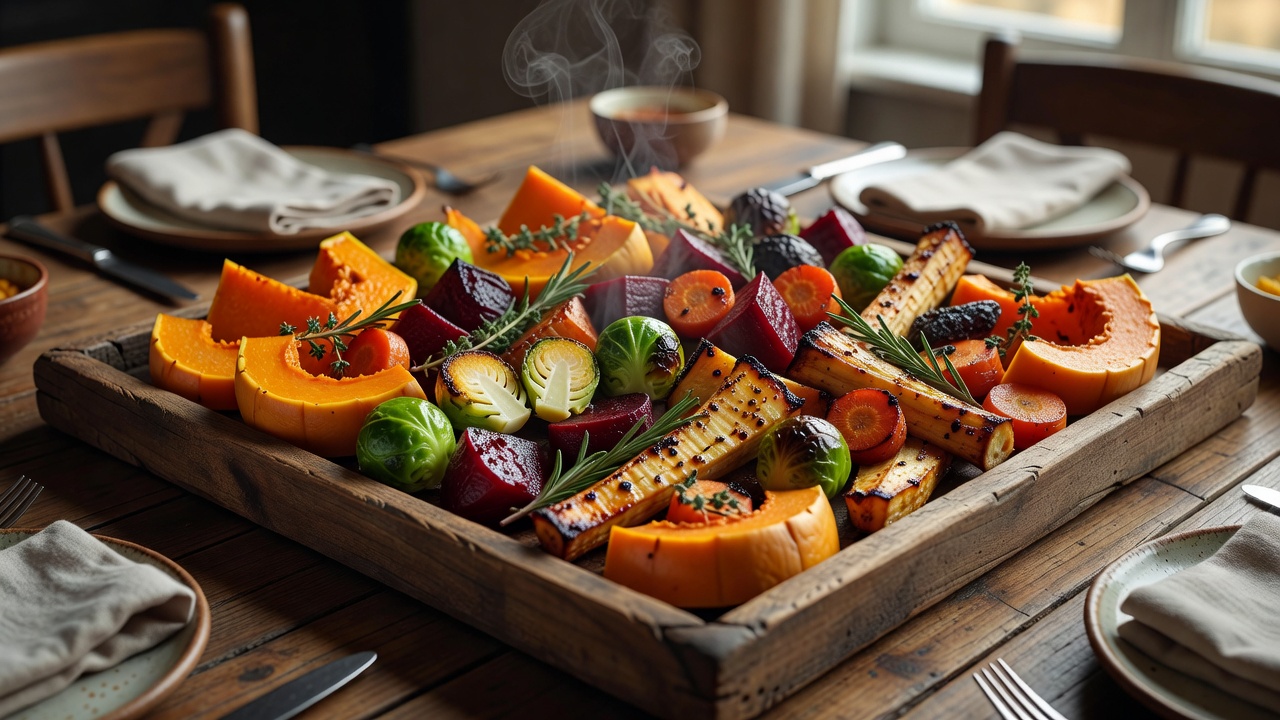
Build the festive main course

Main course • oven sequence • service plan

The main course is often the meal's anchor, but the cook should not have to carry every detail in memory. A useful plan records what the chosen recipe actually requires, what can be prepared ahead, and which appliances or serving dishes are needed at each point. Work from a trusted recipe for exact ingredients, quantities, temperature, timing and yield. This guide helps organise those facts; it does not replace them.

There is no single correct festive centrepiece. Roast meat, fish, a vegetable bake, a filled pastry or a combination of dishes can all suit a gathering. The strongest choice is one that fits guests' needs and the kitchen's capacity, and whose preparation and food-safety requirements you can manage confidently.

Make the menu work as a whole

Check guest needs

Confirm dietary requirements directly and look at complete ingredient labels. A dish labelled vegetarian or free-from should be checked for its actual ingredients and preparation conditions. Plan separate utensils and surfaces where needed to reduce cross-contact.

Map equipment

List the oven, hob, refrigerator space, roasting trays and serving dishes each recipe needs. Two recipes may require different temperatures or shelf positions. Follow their instructions rather than forcing them into a schedule that changes the cooking conditions.

Plan the hand-off

Decide who can help with setting the table, warming suitable sides or carrying dishes. Keep hot pans away from walkways, and use stable heat-safe surfaces. A clear hand-off makes serving smoother and keeps the cook focused on safe handling.

Create a recipe-led schedule

Begin with the main dish's source recipe. Write down its exact preparation requirements, including whether it must thaw in a refrigerator, rest before cooking or stand before carving or serving. Do not substitute room-temperature thawing or an improvised cooking temperature for specific guidance. If the package includes instructions, read those too and reconcile them with the recipe before the day.

Work backward from the intended meal time only after the source instructions are clear. Mark tasks that can be completed earlier, then check whether early preparation changes storage requirements. Ingredients that need refrigeration should remain chilled. Keep raw meat, poultry and seafood sealed and separate from ready-to-eat foods, and clean hands, boards and utensils after handling.

Now add the side dishes. A written table can list each item, its appliance, its required temperature or setting from the original recipe, and its serving vessel. This exposes conflicts early. If the oven is crowded, select a compatible alternative only when the recipes and appliance guidance allow it. Do not assume that adding more trays will preserve heat circulation or cooking results.

For safety-critical cooking, follow the recipe and authoritative local food-safety guidance. Use an appropriate food thermometer where recommended, placing it correctly for the food being checked. A browned exterior, cooking time alone or a familiar appearance cannot always establish safe doneness. Clean the thermometer between readings when necessary.

A main-course planning panel

Ingredient ledger

  • Chosen centrepiece: use the source recipe's exact ingredient list
  • Vegetable or grain sides: check cooking method and appliance needs
  • Sauce or gravy: note separate preparation and safe holding
  • Garnish: prepare with clean tools and keep appropriately stored
Time and temperature: source-recipe figures onlyYield: use the recipe's stated yieldFood safety: follow current local guidance
Order of work

Confirm the menu and guest requirements. Gather equipment and check the instructions. Prepare ingredients with clean hands and separate raw items from ready-to-eat food. Cook according to the source recipe and appliance directions. Verify safety as appropriate, rest or hold only as instructed, then serve with clean utensils.

Make space without compromising the method

Oven planning is about capacity as well as clock time. Note the size of each dish, shelf position and whether it needs uncovered heat, a covered bake or a particular circulation pattern. Do not overfill shelves or obstruct vents. If the recipe requires a temperature change, follow the stated sequence. When several recipes compete, a simpler side that does not need the oven may be the more reliable choice.

Some components can be prepared earlier, but “make-ahead” is not a food-safety category by itself. Decide how each cooked or prepared ingredient will be cooled, covered and stored. Keep chilled food cold and hot food hot in line with the relevant current guidance. Avoid leaving perishable dishes at room temperature while waiting for the entire meal to come together.

Serving is also part of the schedule. Put trivets, carving tools, serving spoons and clean plates where they will be needed. Keep children and guests away from hot cooking zones, and carry heavy pans with a clear path. If the meal is buffet-style, use appropriate hot or cold holding and replenish smaller quantities as practical.

When the plan changes

Equipment can fail, a guest may arrive late, or a dish may need more time. Keep the original recipe available and make adjustments only within safe, supported instructions. A cold side, bread or simple salad may relieve pressure better than interrupting an active cook. If a food's safe handling history becomes uncertain, prioritise safety over avoiding waste.

Use the starter guide to coordinate the first course and the leftovers guide for what follows. The aim is a meal that feels generous and a process that remains manageable.